
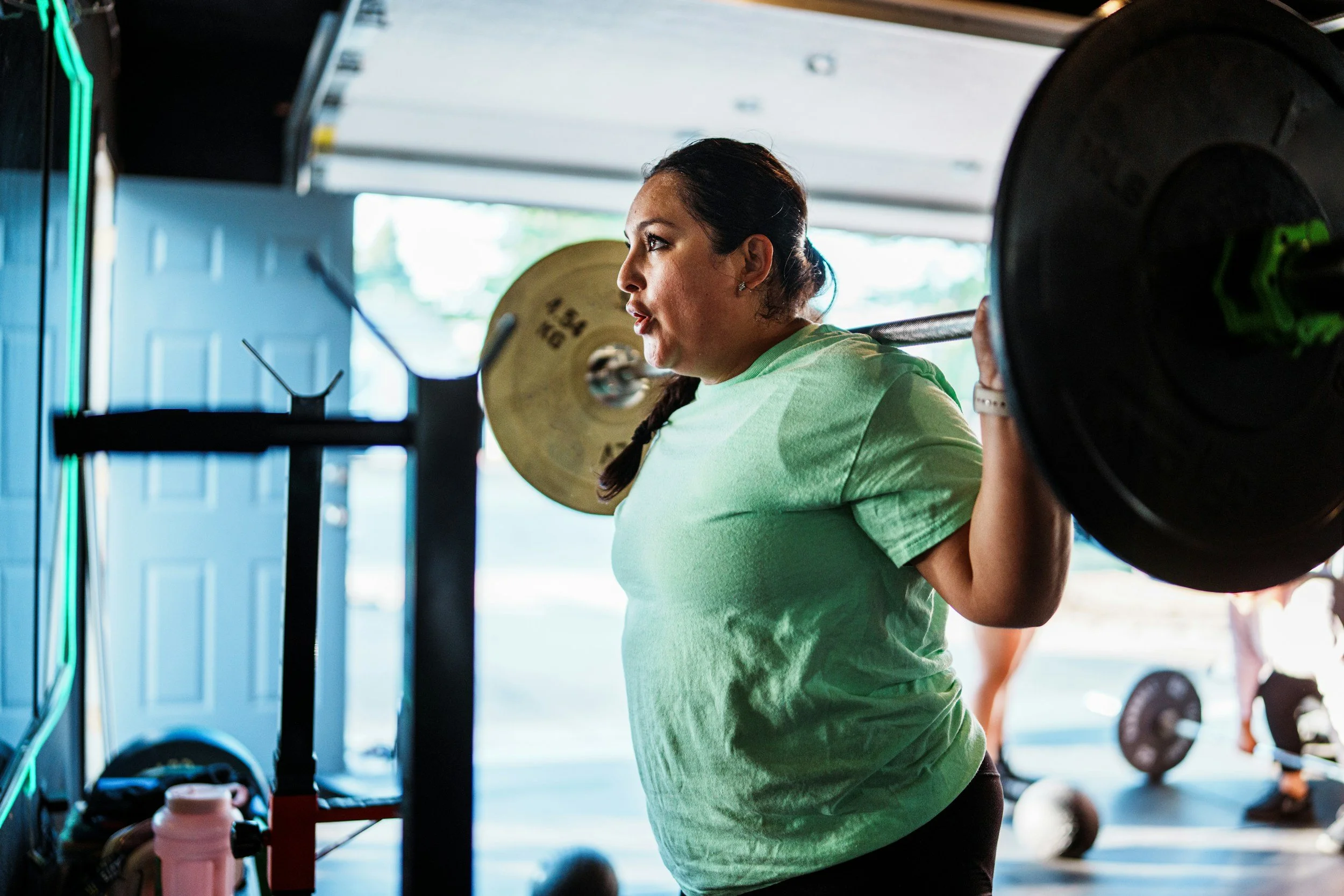
If you've trained with me for a few weeks, you'll have noticed a pattern. Most of your program is built around squats, hinges, presses, pulls and carries, done with barbells, dumbbells and kettlebells. Machines still show up, but they play a supporting role.
That's a deliberate choice. Our clients are training for life and for events: a fun run, an ocean swim, a triathlon, a fitness related event, or simply keeping up with work and family without getting hurt. The way I see it, the gym should make everything outside the gym feel easier. Training movements, not just individual muscles, is the most reliable way to do that.
What we mean by "functional"
"Functional training" gets used to describe everything from balance-board circus tricks to flipping tyres. I use it in a simpler way. A functional exercise trains a movement pattern you already use in daily life or in your sport, so the strength you build carries over.
Most of what we do comes back to a handful of basic patterns:
Squat – sitting down and standing up, getting off the floor, the drive phase of running and cycling
Hinge – picking things up safely, jumping, the hip extension behind every running stride
Push – pushing a door or a pram, getting up off the ground, the sled push in the gym
Pull – lifting bags into the car, rowing, the catch and pull in your swim stroke
Lunge and single-leg work – stairs, hills, and running, which is essentially a series of single-leg landings
Carry and brace – shopping bags, kids, farmer's carries, and holding good posture late in a race
Rotate and resist rotation – swinging, throwing, turning to breathe in the water
If a program covers these patterns well and builds them over time, it covers most of what your body needs to do.
Why free weights and kettlebells
A machine guides the weight along a fixed path. With a dumbbell, barbell or kettlebell, you are the one controlling it. That small difference matters a lot.
You build stability, not just strength. Holding a weight steady makes the smaller stabilising muscles around your hips, shoulders, ankles and trunk work alongside the big movers. These are the muscles that keep your knees tracking well on a long run and your shoulders healthy through thousands of swim strokes.
You train both sides on their own. Dumbbells and kettlebells expose differences between your left and right sides. Many running and cycling niggles start with one side doing more work than the other. We'd rather find that in the gym than at the 15 km mark.
You move the way your body actually moves. Free weights let your joints follow their natural path, and they let us train in different positions and directions. Real life rarely happens in a seated, supported position.
Kettlebells add power and conditioning. Swings, cleans and carries train the hips to produce force quickly, build grip and trunk strength, and get your heart rate up. That mix of strength and fitness is especially useful for time crunched folk.
It works anywhere. A pair of dumbbells or a kettlebell travels well. The skills you learn with us transfer to a hotel gym, a garage setup or a park.
The case for the big compound lifts
Compound movements use several joints and muscle groups at once. Think squats, deadlifts and their variations, lunges, presses, rows and chin-ups. They form the backbone of most of our programs, for good reason.
More return for your time. One set of squats trains your quads, glutes, hamstrings, trunk and upper back together. Most of my clients are fitting training around jobs, families and events, so getting more done in fewer exercises matters.
They teach muscles to work as a team. Running, swimming and lifting a toddler all rely on muscles firing in the right order. Compound lifts train that coordination, not just the size or strength of individual muscles.
They're easy to progress and measure. Adding a little load, a rep or better control week to week is simple to track on a squat or a deadlift. That steady progression is what drives long-term results.
They make your body more robust. Lifting heavier loads through a full range of motion places a healthy stress on muscles, tendons and bones. Over time that builds the resilience that helps you handle higher training volumes and reduces your risk of injury.
They support the goals most people come in with. Whether you want to get stronger, improve body composition or race better, building strength across the whole body is a big part of the answer.
A note on technique: "compound" doesn't mean "heavy from day one". We start with the variation that suits you, whether that's a goblet squat, a kettlebell deadlift from blocks or a supported split squat, and build from there.
So where do machines fit?
Machines aren't the enemy. They're a tool, and a useful one when they're used for the right job. We use them in a few specific ways.
To isolate a muscle that needs extra attention. Hamstring curls, leg extensions and calf raises let us target areas that are often undertrained or that commonly get injured in runners and cyclists, without the rest of the body limiting the set.
To add volume safely. Late in a session, when you're tired and your technique on a free-weight lift would start to slip, a machine lets you keep working the muscle with less risk. A lat pulldown or leg press after your main lifts is a good example.
To work around an injury or a limitation. If a sore back or shoulder means a barbell isn't the right choice this week, a machine often lets us keep training the area while you recover.
To build confidence early on. For someone brand new to the gym, a machine can be a comfortable starting point while we build up the movement skills for free weights.
The way we think about it: free weights and compound movements are the foundation, and machines are the accessories that fill the gaps.
How this looks in your program
A typical Everyday Performance Co. session follows a simple order:
Warm-up and movement prep – mobility and activation that gets you ready for the session ahead
Power or skill work – kettlebell swings, jumps or throws while you're fresh (this part of the program largely depends on your starting point and goals)
Main compound lift – a squat, hinge, press or pull, progressed week to week
Supporting strength – single-leg work, rows, carries and other free-weight exercises
Accessories – targeted work, often on machines, for the areas that need it most
In your first few weeks, the focus is on learning these patterns well and building consistency. From there, we add load, complexity and specific work as you're ready for it.
The bottom line
We want the strength you build in the gym to show up everywhere else: on the start line, in the water, and in everyday life. Free weights, kettlebells and the big compound lifts are the most effective way we know to get you there, with machines playing a useful supporting role.
If you'd like a program built around how you live and what you're training for, get in touch!