
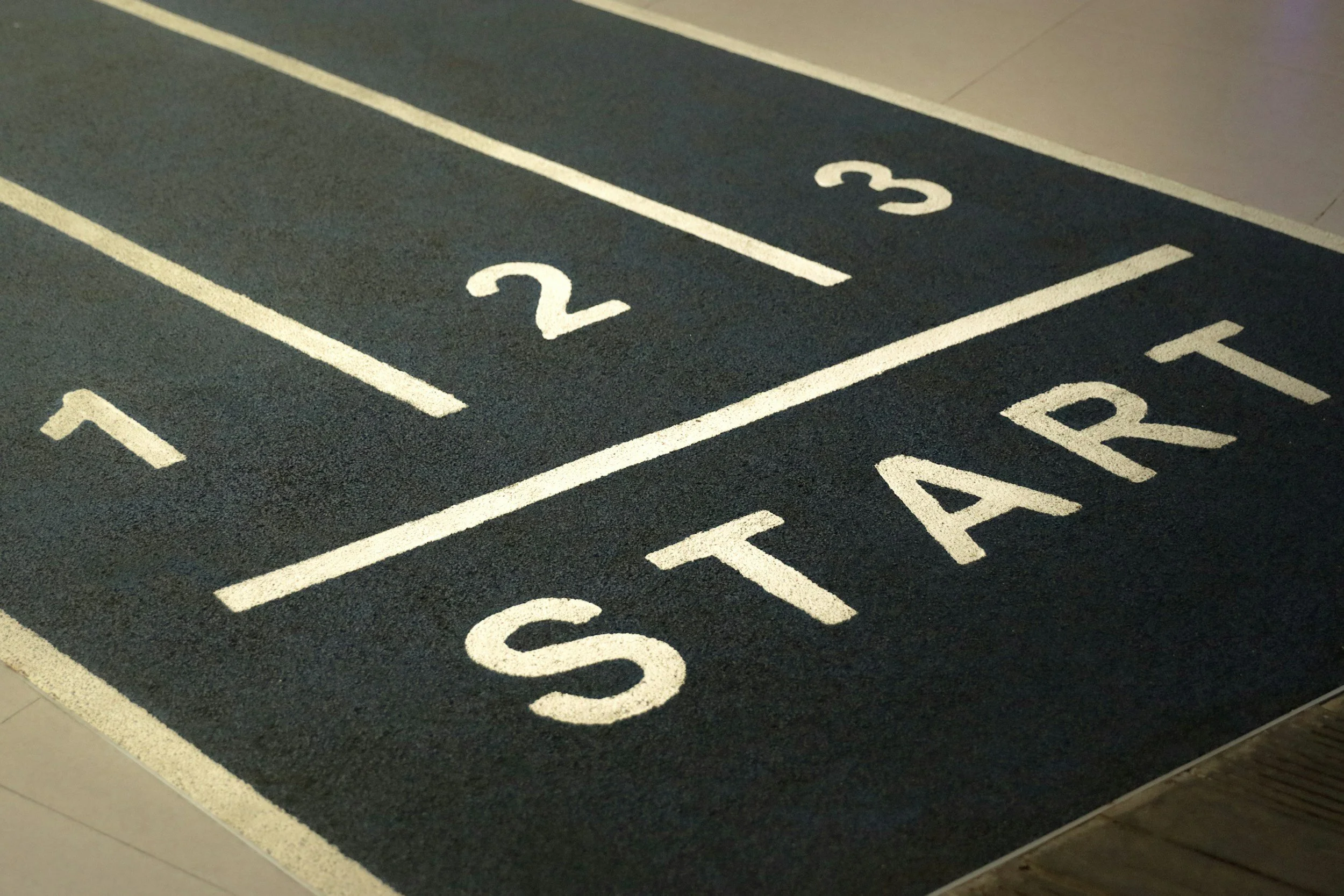
If you've been putting off "getting back into training" because you don't know where to start, you're not alone
and you're not behind.I get this question a lot, especially from people walking into the gym for the first time in a while. You've got a
desk job, a household to run, maybe a business or a team depending on you, and by the time you get five minutes to think about your own health, decision fatigue has already set in. So you either do nothing, or you go too hard too fast on a Monday, wake up wrecked on Wednesday, and quietly give up by the following week.
Here's the good news: getting started is actually simpler than the fitness industry makes it look. You don't need a perfect plan. You need the right priorities, in the right order.
Priority 1: Consistency Beats Intensity, Every Time
This is the one that trips people up the most. When you're starting from scratch, your nervous system, joints and connective tissue aren't ready for maximum effort, even if your motivation is. The goal in week one isn't to see how hard you can go. It's to prove to yourself that you can show up two or three times, in a way that doesn't leave you so sore or so drained that you can't front up again. Think of your first month as building the habit infrastructure. Same days, same rough time, low enough effort that missing it feels like a genuine disruption to your week, not a relief.
Priority 2: Build a Foundation of Full-Body Strength
Before we chase any specific goal, we build general strength across the whole body. This isn't about ego lifting. It's about giving your body a base of tissue capacity and movement competency so that whatever you ask of it later, a big weekend of activity, a heavy grocery shop, chasing the kids, three flights of stairs with a suitcase, doesn't put you at risk.
Practically, that means:
Bilateral compound lifts (squat, hinge, push, pull patterns) to build overall capacity
Unilateral work (split squats, single-arm rows) because most of real life happens on one leg or one arm at
a time, and it exposes imbalances before they become injuries
A mix of machines and free weights machines let you load a muscle safely while you're still learning
control; free weights build the stabiliser strength and coordination that carries over to real life
Priority 3: Develop General Fitness Alongside Strength
Strength gives you the base, but it's only half the picture. General fitness, your cardiovascular capacity, your ability to sustain effort, recover between bouts of exertion and keep functioning without gassing out is what actually makes daily life feel easier. It's what lets you keep up with your kids at the park, get through a busy work day without hitting a wall by 3pm, or handle an unplanned flight of stairs without your heart rate spiking through the roof.
Early on, this doesn't need to be complicated:
Low-intensity aerobic work (brisk walking, easy cycling, swimming) builds your engine without adding fatigue on top of your strength sessions
A small dose of harder conditioning once you've got a base - short intervals or simple circuit-style work starts to build capacity for higher-effort tasks
Frequency matters more than intensity here too a little most days beats one brutal session that leaves you sidelined. Building this alongside strength, rather than instead of it, means you're developing a body that's capable in more than one way - strong and fit, not just one or the other.
Priority 4: Respect the Life You're Already Living
This is the bit that gets skipped in generic programs. If you're running a business, managing a household, or just surviving a demanding job, your training isn't happening in isolation, it's competing with everything else asking for your energy. Chronic stress and poor sleep blunt recovery, so a program that assumes you're a rested 22-year-old athlete is going to fail you.
Realistically, this means:
2–3 sessions a week is a completely legitimate starting point - more isn't automatically better if you can't recover from it
Sessions should leave you energised, not flattened - a good early indicator you've nailed the dosage
Walking counts. A lot. Daily movement outside the gym does more for stress, sleep and fat loss than people give it credit for
Priority 5: Get Nutrition Working With Your Life, Not Against It
You don't need a rigid diet plan on day one. You need your energy and macronutrients roughly aligned with what your body's actually doing. A good starting point is estimating your energy needs using a formula like Harris-Benedict, then building a balanced intake around that with a particular focus on getting carbohydrates in and around your training sessions, since that's when your body uses them best and recovers fastest. The goal isn't restriction. It's giving your body the fuel to actually adapt to the work you're doing.
So, Where Do You Actually Start?
If you're starting from scratch, here's the order of operations:
Lock in 2–3 sessions a week you can realistically sustain - non-negotiable, low-friction consistency
Train full-body, balanced, and controlled - compound lifts, unilateral work, a smart mix of machines and free weights
Build your general fitness alongside your strength - start with easy aerobic work, add harder conditioning once you've got a base
Layer in daily movement and respect your recovery - walking, sleep and stress management are doing more work than people realise
Get your nutrition roughly right, then refine - energy needs first, carb timing around training second, perfection never😅
None of this is about grinding yourself into the ground. It's about building a body that can handle your life, the desk, the deadlines, the school pickups, the goals you haven't said out loud yet - without breaking down along the way.
Start where you are, prioritise what actually moves the needle, and let the rest build from there.